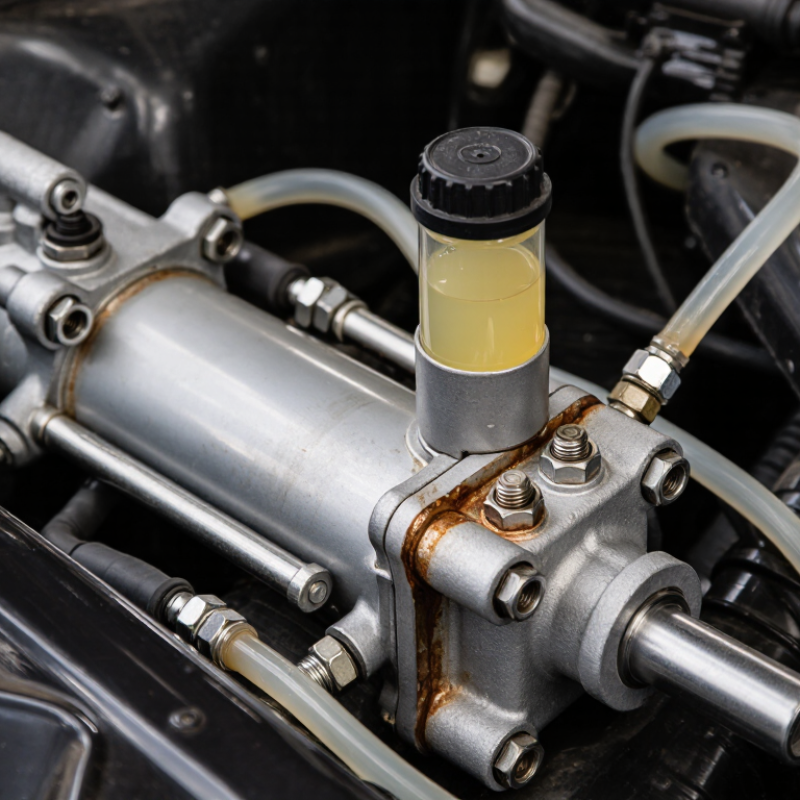
| Hydraulic pressure generation |
The master cylinder converts brake-pedal force into hydraulic pressure for the service brakes. |
Internal seal wear, bore corrosion, or piston damage can allow pressure bypass and reduce braking force. |
Confirm stable hydraulic pressure, firm pedal response, and no external or internal leakage during a controlled brake test. |
| Pedal travel and firmness |
Excessive pedal travel or a pedal that gradually sinks under steady force can indicate hydraulic pressure loss. |
A worn master-cylinder piston seal may permit fluid to bypass within the cylinder, preventing consistent pressure retention. |
Compare pedal height, travel, and holding performance with the vehicle manufacturer’s service specifications. |
| Dual-circuit operation |
Modern hydraulic service-brake systems commonly use two separate circuits to provide partial braking capability if one circuit fails. |
A damaged master cylinder can cause uneven pressure delivery, fluid loss, or improper operation of the split hydraulic circuits. |
Check both circuits for correct pressure, proper warning-lamp behavior, and absence of leaks after bleeding. |
| Fluid retention and leakage |
Brake fluid must remain contained within the reservoir, cylinder, lines, hoses, and wheel-end components. |
Cracked seals, damaged ports, or corrosion around the bore can cause fluid leakage or gradual fluid loss. |
Inspect the cylinder, reservoir, fittings, and surrounding components for wetness, seepage, cracks, and falling fluid level. |
| Brake-fluid contamination |
Moisture, dirt, incompatible fluid, or degraded seals can affect hydraulic components and brake-fluid performance. |
Contamination may damage internal seals or cause corrosion that cannot be reliably corrected by bleeding alone. |
Use the specified brake fluid, flush contaminated fluid when required, and bleed the system until air and contaminated fluid are removed. |
| Air removal and fluid bleeding |
Air is compressible and can produce a spongy pedal and delayed brake response. |
Replacement is necessary when the cylinder cannot be properly primed, contains damaged seals, or continues to introduce pressure loss after bleeding. |
Bench-bleed and vehicle-bleed according to the service procedure, then verify a firm pedal without trapped air. |
| Brake-force balance |
Stable hydraulic output helps the front and rear brake systems deliver predictable braking force. |
Unequal pressure generation or a circuit fault may contribute to pulling, premature wheel lock, or inconsistent stopping behavior. |
Perform a controlled road test and, where available, a calibrated brake dynamometer or roller test to assess left-right and axle balance. |
| FMVSS No. 135 service-brake performance |
FMVSS No. 135 evaluates light-vehicle service-brake performance through procedures that include burnish, baseline, partial-system failure, parking-brake, heat-fade, and recovery testing. |
A defective master cylinder can prevent the vehicle from maintaining the hydraulic performance required during applicable test conditions. |
Evaluate the complete braking system using the applicable current FMVSS No. 135 procedures and the vehicle’s approved service specifications. |
| Warning-system function |
Hydraulic brake systems may use a fluid-level sensor or pressure-differential switch to warn of a fault. |
A cylinder-related fluid loss or circuit imbalance may activate the warning indicator and requires diagnosis before the vehicle is returned to service. |
Confirm that the brake warning indicator operates during the system check and remains off when no fault is present. |
| Compatibility and installation |
The replacement cylinder must match the vehicle’s hydraulic circuit design, mounting arrangement, bore specification, reservoir configuration, and fluid type. |
An incorrect component can alter pedal travel, pressure distribution, or circuit operation even when no external leak is visible. |
Verify part specifications, mounting, pushrod adjustment, line routing, torque values, and fluid compatibility before final testing. |
| Overall stopping capability |
Stopping performance depends on the complete system, including tires, friction material, calipers or wheel cylinders, lines, hoses, electronic controls, and the master cylinder. |
Replacing the master cylinder alone cannot correct unrelated faults elsewhere in the braking system. |
Complete a full-system inspection and confirm stopping performance, straight-line stability, pedal response, and absence of abnormal noise or vibration. |