
Choosing among the top Cylinder Slave Clutch manufacturers worldwide requires more than comparing catalog prices. This guide examines suppliers through practical performance, engineering evidence, and long-term service reliability. A cylinder slave clutch transfers hydraulic pressure to release the clutch smoothly. Its failure can leave a commercial vehicle immobile, often at an inconvenient roadside location.
The evaluation considers bore accuracy, piston movement, seal quality, corrosion resistance, and compatibility with original equipment specifications. Manufacturing consistency matters because a small internal leak may cause incomplete clutch release. Reliable manufacturers usually provide material details, pressure testing procedures, dimensional drawings, and traceable quality records. Their products should also withstand heat, vibration, contaminated fluid, and repeated pedal cycles. Those conditions reflect real workshops, not just laboratory claims.
Aftermarket support is equally important. Clear installation guidance, responsive technical assistance, and dependable warranty policies can reduce repair delays. Evidence from fleet operators, distributors, and independent technicians adds valuable context. However, no ranking is perfect. Product availability changes, regional feedback can differ, and published specifications may omit weaknesses found during installation. That limitation deserves attention.
This overview therefore avoids judging manufacturers by branding alone. It compares their design discipline, production control, documentation, and customer experience. Readers can use these criteria when selecting parts for passenger cars, trucks, agricultural machinery, or specialty applications. The best supplier is not always the largest one. It is the manufacturer that delivers consistent fit, controlled hydraulic performance, and support when the vehicle must return to work.
Top Cylinder Slave Clutch Manufacturers Worldwide
Global Market Scope: 93.5 Million Vehicles Produced Worldwide in 2023
Global vehicle production reached 93.5 million units in 2023, creating strong demand for dependable clutch hydraulic components. Not every vehicle uses a conventional slave cylinder, but the figure shows the market’s enormous scale. Each clutch system must transfer pressure smoothly, even after thousands of pedal cycles.
Experienced manufacturers focus on bore accuracy, seal durability, and stable fluid performance. A small surface defect can cause leakage. That failure may create difficult gear engagement, pedal softness, or unexpected vehicle downtime. Reliable producers use controlled machining, pressure testing, and inspection records for every production batch. They also test components under heat, vibration, cold starts, and repeated actuation.
Field experience matters.
The best suppliers study repair feedback, not only laboratory results. They compare seal wear, corrosion patterns, and installation errors across different vehicle platforms. Material selection must match the hydraulic fluid and operating temperature. Traceable production data also helps technicians identify recurring defects faster.
The 93.5 million vehicle figure offers useful perspective, yet it does not explain every regional requirement. Commercial vehicles may need higher endurance, while passenger cars often prioritize smooth pedal response. Manufacturers sometimes overemphasize output volume. That is a weakness. Consistent quality, verified fitment, and honest failure analysis remain more important than impressive production claims.
Global Market Scope: 93.5 Million Vehicles Produced Worldwide in 2023
The chart shows 2023 vehicle production in selected leading manufacturing countries. Together, these countries represented a substantial share of the approximately 93.5 million vehicles produced worldwide, indicating the geographic scale of the potential cylinder slave clutch demand. Source: International Organization of Motor Vehicle Manufacturers (OICA), 2023 production statistics.
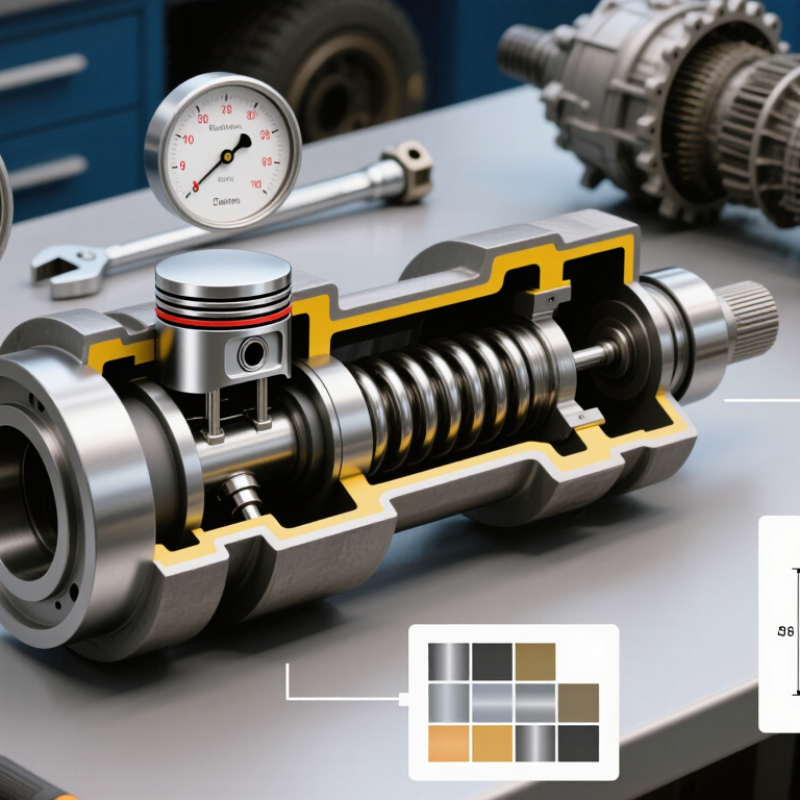
Clutch slave cylinder design depends on four linked values: bore, stroke, pressure, and hydraulic force. The bore sets piston area. A larger bore can produce greater pushrod force at the same pressure, but it needs more fluid volume. It may also reduce release travel, which can affect clutch disengagement.
For example, a 20 mm bore has an area of about 314 mm². At 50 bar, hydraulic force reaches approximately 1,570 N. With a 20 mm stroke, the cylinder consumes about 6.3 cm³ of fluid. These figures help engineers match the slave cylinder with the master cylinder, pedal ratio, and clutch diaphragm load. Small errors can create hard shifting or incomplete release.
In workshop testing, seal friction and temperature often change the result. Cold fluid may respond slowly, while heat can increase seal drag or cause fluid expansion. Bore size is not everything. It rarely works alone. Designers should measure real piston travel, pressure peaks, mounting stiffness, and pushrod alignment. A cylinder can pass a bench test yet perform poorly after thousands of cycles. I have found that installation angle and air bleeding deserve more attention than many drawings suggest. The specification looked sound. The vehicle still shifted badly. That failure usually points to system balance, not one isolated component.
Top cylinder slave clutch manufacturers worldwide serve three distinct channels: OE, Tier-1, and aftermarket suppliers. The difference matters when evaluating fit, durability, and technical support.
OE manufacturers build parts for vehicle assembly lines, following exact platform specifications.
Tier-1 suppliers often provide complete hydraulic systems, testing, and engineering support to vehicle producers.
Aftermarket manufacturers focus on replacement coverage, regional demand, and serviceability.
OICA recorded 93,546,599 motor vehicles produced worldwide in 2023. That volume creates a large installed base for clutch hydraulic components. OE suppliers usually emphasize traceability, automated testing, and strict dimensional control. Tier-1 companies add design validation, material analysis, and long-term production planning. Their slave cylinders may include revised seals, corrosion-resistant pistons, or integrated bleed solutions. These details are easy to overlook.
The aftermarket remains more complex.
A single supplier may support older vehicles, multiple transmission versions, and varying workshop practices. The Auto Care Association’s 2024 industry forecast placed the United States automotive aftermarket above 500 billion dollars in annual economic activity, showing the channel’s scale. However, market size does not guarantee component quality.
Buyers should compare leakage tests, pressure ratings, warranty records, and application catalogs. A low price can hide inconsistent tolerances. Regional performance also varies, and global rankings are never perfectly objective. Supplier selection still requires hands-on validation.
Top Cylinder Slave Clutch Manufacturers Worldwide
Quality begins with controlled production, not attractive catalog images. IATF 16949 shows that a manufacturer follows automotive-specific quality processes, including defect prevention, traceability, and continuous improvement. ISO 9001 supports consistent documentation, supplier control, and corrective action. These systems matter when a slave cylinder must perform through heat, vibration, and repeated hydraulic pressure.
FMVSS 116 is equally important when selecting compatible clutch fluids. It defines performance requirements for automotive brake fluids, including moisture tolerance, boiling points, viscosity, and corrosion resistance. A reliable manufacturer should test seals and cylinder materials with suitable DOT-rated fluids. Product validation should include pressure cycling, leakage checks, low-temperature operation, and long-term aging. Certification is valuable, but it does not prove every part is perfect. That assumption deserves caution.
Tips: Request current certificates, test summaries, batch traceability, and fluid-compatibility data. Check whether the stated DOT fluid matches the vehicle specification. Ask how rejected parts are isolated. Small details reveal process maturity. In practice, I have found that clear records often matter more than polished claims. Some suppliers may provide excellent documents but limited real-world testing. That gap should be discussed before approval. Also inspect sampling methods, because a passing sample cannot represent uncontrolled production. Reliability grows when engineering evidence, factory discipline, and honest communication support each other.
Supplier evaluation should begin with exact fitment, not catalogue size. Confirm bore diameter, pushrod length, mounting-hole spacing, connector style, and fluid compatibility. A 1 mm mismatch can create incomplete clutch release or rapid seal wear. Ask suppliers for dimensional inspection records and vehicle-application data. The 2024 Auto Care Association and AASA Joint Channel Forecast projected the U.S. automotive aftermarket above 400 billion dollars, increasing pressure on suppliers to prove quality, not only availability.
Leakage testing needs clear evidence. Require 100% pressure testing, with recorded test pressure, holding time, and acceptable pressure loss. Check static leakage, dynamic cycling, and low-temperature performance. ISO 16750 environmental testing offers a useful framework for temperature, vibration, and fluid exposure. For durability, request cycle-test results under heat and contaminated-fluid conditions. A laboratory pass is valuable. Real-road validation matters more. This distinction is often missed.
Tips:
Compare warranty claims per 1,000 units, not vague “low-return” statements. Request failure photos, root-cause reports, and replacement timing. A warranty longer than twelve months sounds reassuring, but exclusions may weaken it. Review claim approval rates and repeat failures by application. The 2024 S&P Global Mobility aftermarket outlook links vehicle age with sustained repair demand, making long-term seal durability commercially important. I would still avoid choosing the cheapest cylinder. Price matters, but an attractive unit with uncertain fitment can become an expensive workshop comeback.
Bore size determines piston area and hydraulic force. A larger bore creates more force at the same pressure. It also requires more fluid and may reduce release travel. Bigger is not always better.
A 20 mm bore has an area near 314 mm². At 50 bar, it produces approximately 1,570 N. With a 20 mm stroke, fluid use is about 6.3 cm³. These values help match the master cylinder and pedal ratio.
Seal friction, temperature, alignment, and mounting stiffness also affect performance. Cold fluid may respond slowly. Heat can increase seal drag or expand the fluid. The drawing may look correct, yet shifting can still feel poor.
Confirm bore diameter, pushrod length, mounting-hole spacing, connector style, and fluid compatibility. Even a 1 mm mismatch can cause incomplete release. Measure the real part when possible. Catalogue information can be imperfect.
Request recorded pressure, holding time, and acceptable pressure loss. Static leakage testing checks sealed pressure without movement. Dynamic cycling checks repeated piston travel. Low-temperature testing can reveal slow response and seal problems.
Ask for cycle-test results under heat and contaminated-fluid conditions. Review vibration, fluid exposure, and temperature testing. Laboratory results are useful. Real-road validation matters more, though it is often overlooked.
Compare warranty claims per 1,000 units, not vague low-return claims. Request failure photos, root-cause reports, and replacement timing. Check claim approval rates and repeat failures. A long warranty may contain restrictive exclusions.
Not necessarily. A low price can hide inconsistent tolerances or uncertain fitment. An incorrect cylinder may cause leakage, hard shifting, and workshop comebacks. I would inspect test records before chasing savings.
The global cylinder slave clutch market is supported by the scale of vehicle production, with approximately 93.5 million vehicles manufactured worldwide in 2023. This article explains how clutch slave cylinders convert hydraulic pressure into mechanical movement, focusing on bore size, stroke length, operating pressure, and hydraulic force. These design factors directly influence clutch engagement, pedal feel, response time, and long-term reliability across different vehicle applications.
It also reviews worldwide supplier categories, including original-equipment, tier-one, and aftermarket manufacturers, without focusing on specific brands. Key quality considerations include IATF 16949 and ISO 9001 certification, as well as compatibility with FMVSS 116 DOT brake fluids. For effective supplier evaluation, buyers should examine vehicle fitment, dimensional accuracy, leakage-test results, endurance performance, material quality, production consistency, and warranty data. A thorough comparison of these factors helps identify dependable Cylinder Slave Clutch solutions for safe and efficient clutch system operation.
