
Choosing a brake master cylinder manufacturer requires more than comparing catalogue prices. The part converts pedal force into hydraulic pressure, so bore size, seal performance, machining quality, and vehicle fitment all matter. Searches for Main Cylinder Brakes often lead buyers to a wide mix of replacement parts and original-equipment suppliers. The terminology can be confusing. A careful comparison helps separate useful specifications from broad marketing claims.
This guide introduces ten manufacturers relevant to global buyers and outlines factors worth checking before requesting a quotation. These include product range, manufacturing experience, quality-control practices, technical documentation, customization options, and support for export orders. Buyers should confirm current certifications, vehicle compatibility, warranty terms, and production lead times directly with each supplier. A polished website is not proof of consistent quality. Ask for clear drawings, material details, and test information where appropriate. Small details matter.
The list is intended as a starting point, not a universal ranking. Supplier strengths can vary by region, vehicle platform, order volume, and aftermarket needs. Some companies may suit established distributors, while others may be better positioned for specialized applications. That distinction is easy to overlook. We also recognize that public information does not reveal every aspect of factory performance. Use the profiles to shape practical questions, then assess each candidate against your own technical requirements and sourcing standards.
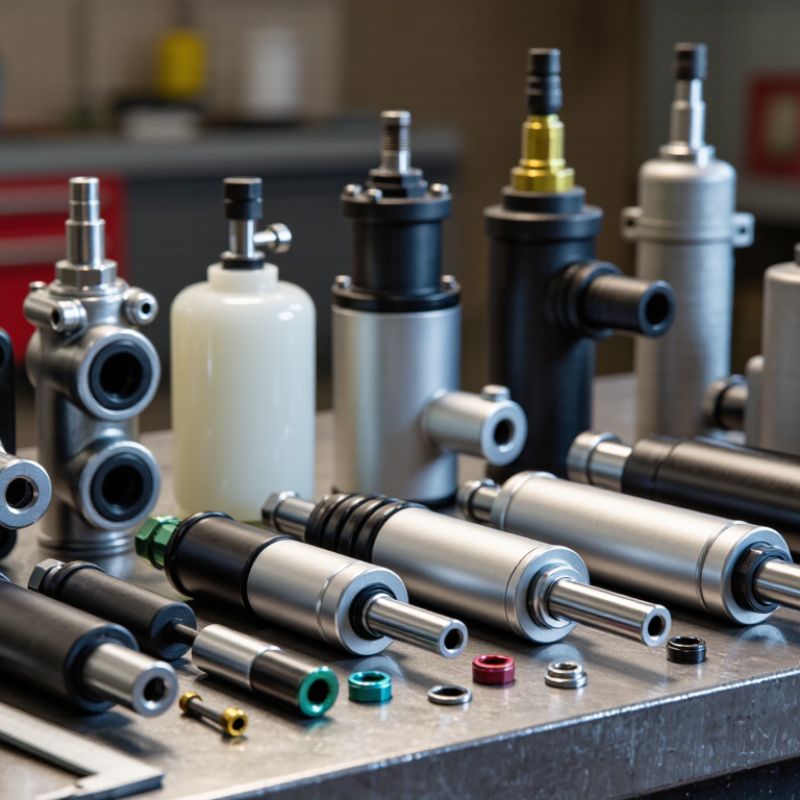
A brake master cylinder converts pedal force into hydraulic pressure. When a driver presses the pedal, its piston moves brake fluid through sealed lines toward the wheel brakes. In many passenger vehicles, a tandem design separates the hydraulic system into two circuits. If one circuit loses pressure, the other may still provide limited braking. The pedal may feel unusually soft or sink toward the floor. That warning deserves prompt inspection.
The master cylinder works with the brake booster, fluid reservoir, lines, calipers, or wheel cylinders. Each part matters: air or a leak can weaken pressure, while worn seals may allow internal fluid bypass. NHTSA’s Traffic Safety Facts: 2022 Data recorded 42,514 U.S. road deaths. That figure does not attribute crashes to master-cylinder faults, but it underscores why predictable braking response matters. For global buyers comparing manufacturers, check documented pressure testing, material specifications, and traceable quality controls—not just catalog fit.
Tips: Check fluid level and look for wetness around the cylinder and lines. A low reservoir can signal a leak, not simply normal use. Never ignore a changing pedal feel. Maintenance advice can be imperfect; vehicle-specific service procedures still matter.
When comparing brake master cylinder manufacturers for global purchasing, evaluate more than unit price. Ask how bore diameter, reservoir design, and mounting points are controlled across production batches. Request drawings and tolerance data, then compare them with your vehicle application. Small dimensional differences can complicate installation or affect pedal feel.
Material selection and process control matter. Ask whether housing materials, seals, and surface treatments are specified and traceable. A capable supplier should explain pressure testing, leak checks, and inspection frequency, not just provide a certificate. Request sample test records and clarify how nonconforming parts are isolated. Documentation should match the exact part number and revision. Details matter.
Also assess engineering support, production capacity, and communication. Can the manufacturer review fitment questions and share realistic lead times? Check packaging, labeling, and batch identification, especially when parts move through several warehouses. Ask about warranty handling and replacement procedures before an issue occurs. A polished audit report is useful, but it cannot show every shift on the factory floor. No checklist catches everything. If possible, inspect a sample and compare it with the specification. Record unresolved concerns rather than assuming they will disappear. A decision may still involve trade-offs, and that deserves honest discussion.
Anonymous buyer’s evaluation framework. The rows below are selection criteria, not a ranking of named manufacturers. Verify each supplier’s claims, certificates, and test results for the specific facility and product being quoted.
| No. | Evaluation factor | What buyers should verify | Useful evidence or benchmark | Why it matters |
|---|---|---|---|---|
| 1 | Automotive quality management | Whether the manufacturing site has a current automotive quality-management certification covering the quoted product and processes. | Check the certificate, issuing body, validity dates, and site scope. IATF 16949 is an automotive-sector QMS standard; ISO 9001 is a general QMS standard. | A certificate alone does not prove product suitability, but a valid, relevant quality system is an important supplier-screening check. |
| 2 | Application and product coverage | Supported vehicle types, brake-system layouts, mounting and port configurations, reservoir options, and left- or right-hand-drive requirements. | Request application drawings, interface dimensions, material specifications, and a clearly defined list of compatible vehicle or system applications. | Master cylinders are not automatically interchangeable; bore size, ports, pushrod interface, and system design must match the application. |
| 3 | Design and engineering capability | Ability to support design reviews, tolerance analysis, material selection, validation planning, and controlled engineering changes. | Review design-change procedures, engineering drawings, test plans, and the supplier’s process for customer approval of changes. | Brake hydraulic components are safety-related; changes to geometry or materials can affect fit, sealing, and system performance. |
| 4 | Materials and corrosion protection | Cylinder-body, piston, seal, spring, and reservoir materials, along with coatings and compatibility with the specified brake fluid. | Request material specifications, fluid-compatibility information, coating details, and relevant corrosion-test reports for the intended environment. | Material and fluid compatibility influence sealing, corrosion resistance, and service life; suitability depends on the design and application. |
| 5 | Production and process control | Controls for machining, honing, assembly, cleanliness, seal installation, and calibration of inspection equipment. | Ask for process-flow diagrams, control plans, inspection records, equipment-calibration records, and process-capability data where applicable. | Consistent control of critical dimensions and assembly steps helps reduce leakage, fit, and performance issues. |
| 6 | Testing and validation | Product-specific verification for leakage, pressure performance, function, durability, and environmental exposure as defined by the design requirements. | Review test methods, acceptance criteria, equipment calibration, sample identification, and complete reports. Confirm whether tests are performed in-house or by a qualified external laboratory. | Test requirements vary by application; buyers should compare results against the agreed drawing and specification rather than assume a universal pass threshold. |
| 7 | Regulatory and vehicle-level compliance support | The supplier’s ability to provide technical documentation and support the buyer’s applicable vehicle-level compliance process in each destination market. | For the United States, FMVSS No. 105 and No. 135 set requirements for vehicle braking systems. FMVSS No. 116 addresses motor vehicle brake fluids. Confirm which requirements apply to the finished vehicle and product. | A component supplier’s test report or certificate should not be treated as automatic proof that a complete vehicle meets applicable regulations. |
| 8 | Traceability and change management | Lot or batch identification, records linking parts to production and inspection data, and notification controls for product or process changes. | Request sample traceability records and written procedures for nonconforming product, corrective action, and customer notification. | Effective traceability supports investigation, containment, and field-action decisions when a quality issue occurs. |
| 9 | Capacity and supply continuity | Available production capacity, lead-time assumptions, raw-material sourcing risks, contingency planning, and ability to support forecast changes. | Request a documented capacity plan, quoted lead time, minimum order quantity, business-continuity approach, and escalation contacts. | Delivery performance depends on the specific factory, product mix, order volume, and supply-chain conditions; assess these against the buyer’s forecast. |
| 10 | Commercial terms and after-sales support | Quoted price basis, tooling ownership, payment terms, warranty process, spare-parts support, and responsiveness to technical or quality claims. | Compare like-for-like quotations and review written warranty terms, claim-response timelines, packaging specifications, and Incoterms® version and named place. | A clear agreement reduces ambiguity around total landed cost, responsibility, and post-delivery issue resolution. |
Global buyers comparing the top 10 brake master cylinder manufacturers should look beyond catalog size. Check whether a supplier can provide clear bore-diameter, material, and operating-pressure specifications. Ask how each production lot is inspected, and whether test records can be traced to the shipped components. A neat datasheet helps, but it does not replace evidence of consistent quality.
Tips: Request sample parts and dimensional inspection reports. Compare the cylinder finish, port threads, and seal seating under good light. Confirm packaging protects machined surfaces during long transit. Small details matter.
Also discuss lead times, minimum order quantities, and communication across time zones before placing an order. A capable manufacturer should explain technical limits plainly, not promise every configuration. Ask about change control when drawings or materials are revised. It is easy to overlook this point during early price comparisons. Supplier rankings can guide research, but a shortlist still needs careful verification against your vehicle requirements and service conditions.
Global buyers comparing brake master cylinder manufacturers should look beyond catalog size. OICA’s 2023 production report records about 93.5 million vehicles built worldwide, reflecting the scale and variety of service demand. A useful range covers tandem-cylinder designs, different bore diameters, reservoir layouts, and left- or right-hand-drive applications. Ask for vehicle-level fitment data, seal specifications, and clear guidance on ABS compatibility. Fit matters more. A broad catalog is less useful when part numbers lack traceable cross-references or installation details.
Quality claims need evidence. IATF 16949:2016 sets automotive quality-management requirements, but certification alone does not prove every cylinder’s durability. Compare test documentation, material traceability, and the supplier’s process for investigating failures. Market reach also means more than exporting: check regional stock, realistic lead times, warranty handling, and access to engineering support. The IEA’s Global EV Outlook 2024 projected electric-car sales above 17 million that year, a shift that makes hydraulic-system compatibility and packaging worth checking carefully. The cylinder still matters. Supplier comparisons can miss practical issues, especially when specifications look complete but omit vehicle-specific validation.
A quality-standard reference for global brake component buyers. The chart compares minimum dry and wet boiling points specified for common DOT brake-fluid classifications; it does not rank manufacturers.
Values shown are minimum temperatures in °C under U.S. Federal Motor Vehicle Safety Standard No. 116. Always use the fluid grade specified by the vehicle manufacturer.
Selecting a brake master cylinder manufacturer starts with the vehicle and operating conditions, not a catalog headline. Confirm bore diameter, reservoir layout, mounting points, pressure range, and fluid compatibility against your application. A mismatch of only a few millimeters can complicate installation or change pedal feel. Ask for dimensional drawings and material specifications before requesting a quotation.
Reliable suppliers can explain how they control machining, sealing, and assembly. Request inspection records, traceability details, and test results for leakage and pressure performance. If your order involves several vehicle variants, check whether samples are available for fitment evaluation. A short production run can reveal issues that a polished presentation cannot. That takes time, but it may prevent costly rework.
Also assess communication and supply capacity. Ask about tooling ownership, minimum order quantities, lead times, packaging, and how production changes are documented. Clear answers matter. Verify that stated quality certifications are current and relevant to the facility making your parts. References from comparable buyers can add useful context, though they are not proof of consistent performance. One awkward point: a supplier may meet every listed requirement and still be a poor fit if responses are slow or technical questions go unanswered. Record unresolved concerns before committing.
Compare bore diameter, reservoir layout, mounting points, and overall dimensions. Small differences can change installation and pedal feel. Fit matters.
Request engineering drawings, tolerance data, and batch inspection records. Match every measurement with your vehicle application. Do not rely on catalog photos.
Check housing materials, seals, coatings, and revision-controlled part numbers. Ask for documented material sources and batch identification. Details matter.
Request pressure-test results, leak-check records, and inspection frequencies. Sample records are useful. Certificates alone may not explain actual production quality.
No. A useful range should cover bore sizes, reservoir designs, tandem cylinders, and driving-side variations. Vehicle-level fitment data matters more.
Confirm fitment, seal specifications, reservoir connections, and ABS compatibility. Ask for vehicle-specific validation documents. Specifications can still miss practical problems.
Review production capacity, lead times, packaging, labeling, and warehouse handling. Clear batch markings help trace parts after several transfers. Communication matters.
Ask who investigates failures, how defective parts are isolated, and how replacements are approved. Record unresolved concerns. Problems rarely disappear by themselves.
No. An audit shows limited evidence. Inspect samples when possible, compare them with specifications, and document remaining doubts. No checklist catches everything.
Growing electric-vehicle use makes hydraulic-system compatibility and protective packaging worth checking carefully. Demand forecasts are imperfect. Practical validation remains essential.
This article explains how brake master cylinders convert pedal pressure into hydraulic force and how they work with other components in a vehicle’s braking system. It outlines the main design and performance considerations buyers should understand, including fitment, material quality, manufacturing consistency, testing practices, and product coverage. The term Main Cylinder Brakes is also considered in the context of identifying relevant products and sourcing requirements.
A structured overview of ten manufacturers helps global buyers compare product ranges, quality standards, production capabilities, and market reach without relying on brand promotion. The article also presents practical criteria for choosing a supplier, such as technical support, customization options, quality documentation, delivery reliability, and compatibility with intended applications. By weighing these factors against project needs and purchasing priorities, buyers can make a more informed decision when selecting a brake master cylinder manufacturer.
