
Top 10 Vehicle Brake Parts Manufacturers Worldwide

Time:2026-10-20 Author:Sienna
0%

Choosing reliable Vehicle Brake Parts manufacturers requires more than comparing prices, catalog size, or polished websites. It requires practical evidence. Manufacturing consistency, friction-material performance, rotor metallurgy, testing procedures, and supply-chain traceability all influence braking confidence. A product may look excellent on a warehouse shelf, yet perform differently after repeated downhill braking, winter corrosion, or heavy urban traffic.

As automotive braking specialist Steve Sargent has stated, “Brake system performance is only as good as the weakest component.” That principle guides this overview. The following ranking examines ten leading Vehicle Brake Parts manufacturers worldwide, considering engineering capability, product breadth, manufacturing experience, quality controls, and market reputation. It also considers how each company serves passenger vehicles, commercial fleets, and increasingly complex electronic braking systems.

Real-world details matter. A quiet pad is useful, but stable friction at high temperature matters more. A bright rotor finish means little without accurate thickness control. Certification helps, but it does not replace disciplined testing. Buyers should still verify specifications.

No ranking is perfect.

Regional standards, vehicle age, climate, and driving habits can change the outcome. Some manufacturers excel in original-equipment supply, while others offer stronger aftermarket coverage. A few appear less impressive because their public technical information is limited, not necessarily because their products are weak. This guide therefore aims to provide a careful starting point, not an absolute verdict. For workshops, distributors, fleet managers, and vehicle owners, the best choice remains the manufacturer that combines dependable performance with transparent documentation and consistent support.
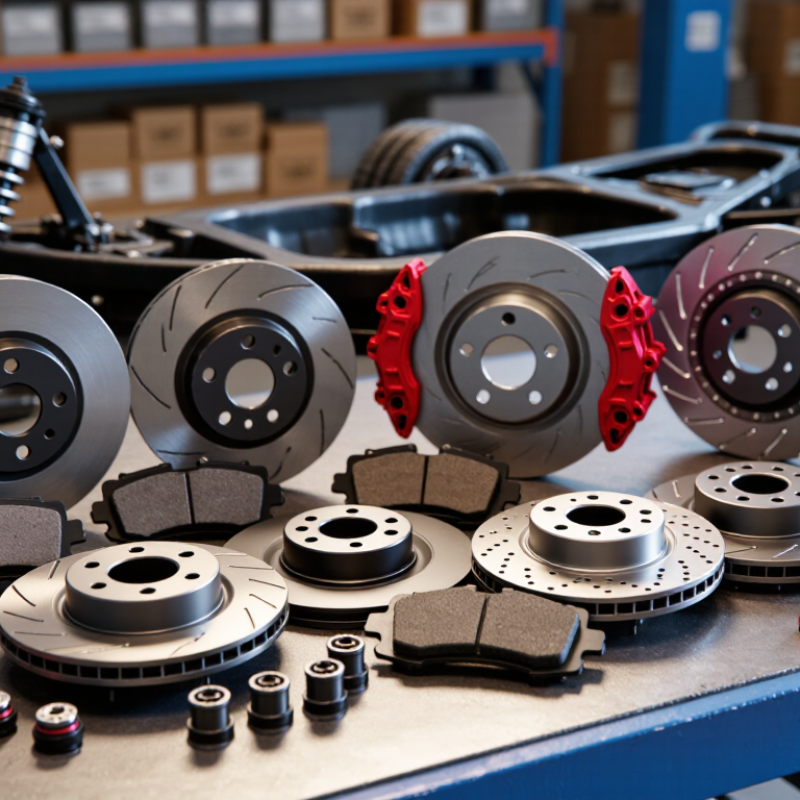
Top 10 Vehicle Brake Parts Manufacturers Worldwide

How Vehicle Brake Parts Manufacturers Are Evaluated Worldwide

Top 10 Vehicle Brake Parts Manufacturers Worldwide

How Vehicle Brake Parts Manufacturers Are Evaluated Worldwide

Evaluating leading brake parts manufacturers requires more than comparing production volume. Experts examine stopping performance, material consistency, testing depth, and field reliability. A dependable supplier should provide traceable steel, friction compounds, and coating specifications. Factory audits also reveal whether actual production matches published claims.

Independent laboratories commonly measure braking distance, fade resistance, noise, vibration, and wear. Tests may simulate mountain descents, city traffic, heavy loads, and winter salt exposure. Engineers also inspect calipers, rotors, pads, drums, sensors, and hydraulic components for dimensional accuracy. Small defects matter. A slightly uneven rotor can create steering shake and uneven pad wear.

Global evaluation includes certification, recall history, warranty handling, and technical support. Manufacturers serving different markets must understand varied road conditions and regulatory requirements. Clear installation instructions help workshops avoid fitting errors. Training records and documented quality controls strengthen confidence. However, laboratory results cannot predict every driver’s experience. Road dust, poor maintenance, and overloaded vehicles can change outcomes.

Cost deserves attention, but the cheapest part may create higher replacement expenses. Buyers should compare service life, warranty evidence, and failure rates over time. Customer feedback is useful when verified against independent data. Some published reviews remain vague. They need careful examination. A strong manufacturer accepts testing, reports limitations, and improves products after real-world findings.

Global Market Scope and Major Brake Component Categories

The global brake parts market covers passenger cars, commercial vehicles, buses, and specialty transport. Demand varies by region, road conditions, vehicle age, and maintenance habits. Manufacturers compete across several major categories, including brake pads, discs, drums, calipers, rotors, master cylinders, hoses, and electronic sensors.

Brake pads and discs remain high-volume products in many markets. Heavy vehicles often require stronger friction materials and larger thermal capacity. Calipers must maintain accurate pressure under repeated braking. Electronic components also matter more as modern vehicles use stability control and automated safety systems. Quality testing should include heat resistance, wear behavior, noise control, corrosion protection, and dimensional accuracy. Real workshop experience shows that one part rarely fits every driving environment. That assumption can cause problems.

Tips: Compare friction ratings, service data, and warranty terms before purchasing. Check whether the component matches the vehicle’s axle, load rating, and operating climate. Inspect discs for uneven wear and measure pad thickness during routine service. Keep installation records. They reveal recurring failures.

A worldwide manufacturer also needs dependable materials, traceable production, and consistent inspection procedures. Regional regulations differ, so certification and labeling require careful verification. Supply chains can fail during raw material shortages or shipping delays. Some market reports also overstate growth because replacement demand is difficult to separate from new vehicle production. Buyers should question broad claims and review technical evidence. Small details matter.

Profiles of the Top 10 Vehicle Brake Parts Manufacturers

Top 10 Vehicle Brake Parts Manufacturers Worldwide

Profiles of the Top 10 Vehicle Brake Parts Manufacturers

The global brake system market reached approximately USD 29.45 billion in 2023, according to Grand View Research. Demand is moving toward lighter, quieter, and electronically controlled braking components. The ten manufacturers profiled here reflect different strengths rather than one perfect ranking.

One leading manufacturer focuses on high-volume disc pads and rotors for passenger vehicles. Another specializes in commercial vehicle air-brake assemblies, where sealing accuracy matters. A third supplies integrated electronic braking modules for advanced driver-assistance systems. Two manufacturers stand out for forged calipers and heat-resistant alloys. Another builds precision sensors and wear indicators. A further specialist serves electric vehicles with low-copper friction materials. One company emphasizes remanufactured calipers and circular production. Another combines regional plants with aftermarket distribution. The final profile represents a smaller engineering-led supplier, known for customized components and short production runs.

The International Organization of Motor Vehicle Manufacturers recorded more than 93 million vehicle production units worldwide in 2023. That scale increases pressure on testing, traceability, and consistent friction performance. Independent industry reports also identify electric vehicle growth as a major brake-parts trend, although regenerative braking can reduce mechanical brake use. This creates a difficult business balance. Fewer friction events may increase corrosion risks, not eliminate maintenance needs. The profiles therefore consider material quality, certification practices, production capacity, and field reliability. The comparison is useful, but not flawless. Public data often combines complete systems with individual replacement parts, which can distort market rankings.

Manufacturing Technologies, Quality Standards, and Product Coverage

Leading vehicle brake-parts manufacturers now combine automated production with strict human verification. OICA reported 93.5 million motor vehicles produced worldwide in 2023. That scale demands stable processes, not only impressive machinery. CNC machining controls disc thickness, while automated casting and pressing improve repeatability. Laser measurement checks runout within seconds. End-of-line dynamometers then test braking force, noise, and temperature behavior.

Quality systems provide the second control layer. IATF 16949 supports automotive process management, while ISO 9001 strengthens document control and corrective action. Safety requirements vary by market, including UNECE R90 for replacement friction materials and FMVSS 135 for passenger-car braking performance. Reliable facilities also use batch traceability, material certificates, and vision inspection. A single barcode should connect a pad to its compound, oven cycle, and final test result. Small detail. Big consequence.

Product coverage increasingly includes discs, drums, pads, calipers, hydraulic cylinders, hoses, wear sensors, and electronic parking-brake components. The IEA’s Global EV Outlook 2024 recorded nearly 14 million electric-car sales in 2023, representing about 18% of global new-car sales. Regenerative braking changes friction-brake workloads, but it does not eliminate mechanical braking. Manufacturers must therefore manage corrosion, low-use glazing, and software-linked control interfaces. Automation helps, yet it is not flawless. Public quality reports also use different testing scopes, so direct comparisons can mislead. Manufacturers should publish failure rates, warranty evidence, and independent test results—not only factory photographs.

Regional Reach, Market Position, and Supplier Comparison

Top 10 Vehicle Brake Parts Manufacturers Worldwide

Regional reach shapes how leading brake parts manufacturers compete. Suppliers with plants in North America often provide faster delivery for local assembly programs. European manufacturers typically emphasize engineering depth, testing discipline, and premium aftermarket support. Asia-Pacific producers offer broad capacity and competitive pricing. Latin American and Middle Eastern markets depend more heavily on distribution coverage and import reliability.

Market position should not rely on production volume alone. In supplier audits, I examine brake pad consistency, rotor balance, batch traceability, and technical response times. A capable manufacturer can explain friction ratings clearly and provide stable test records. Warehouse location also matters. A delayed shipment can stop a repair line, even when the product itself performs well. Small details matter.

Supplier comparison becomes clearer through weighted evaluation. Quality systems may receive 30 percent, regional delivery 25 percent, and total cost 20 percent. Technical support, warranty handling, and capacity can share the remaining weight. This method exposes weak points behind attractive quotations. However, rankings can mislead. A large supplier may overlook smaller customers, while a regional producer may offer stronger communication. I have seen both outcomes. Environmental reporting and worker safety should also be checked, not assumed. Documentation can look complete but still require independent verification.

FAQS

Which brake components are most common worldwide?

Brake pads and discs have high demand across passenger cars and commercial vehicles. Drums, calipers, hoses, cylinders, rotors, and sensors also remain important. Small details matter.

How should buyers match brake parts to a vehicle?

Check the axle, load rating, vehicle type, and operating climate. A heavy vehicle may need stronger friction material and greater heat capacity. One part rarely fits every environment.

What quality tests should brake components pass?

Testing should examine heat resistance, wear, noise, corrosion, dimensions, and braking force. Disc runout and pad thickness require careful measurement. Factory photographs are not enough.

How can buyers verify production traceability?

A batch code should connect each part with its materials and testing records. Useful records include compound details, heat cycles, inspection results, and final measurements. Keep installation records. They reveal patterns.

Do electric vehicles still need mechanical brakes?

Yes. Regenerative braking reduces some friction-brake use but does not remove mechanical braking. Low use can increase corrosion or surface glazing. That risk is easy to overlook.

Which manufacturing technologies improve brake-part consistency?

Computer-controlled machining can stabilize disc thickness and dimensional accuracy. Automated casting and pressing improve repeatability. Laser measurement checks runout quickly. Human verification remains necessary.

How should companies compare international brake-part suppliers?

Evaluate quality systems, delivery coverage, total cost, technical support, warranty handling, and production capacity. A practical weighting method can expose weaknesses behind cheap quotations. Rankings can still mislead.

What supply-chain risks should buyers examine?

Raw material shortages and shipping delays can interrupt repair or assembly operations. Warehouse location and regional distribution affect delivery speed. A good product may still arrive too late. I might underestimate communication quality sometimes.

Conclusion

This article provides a comprehensive overview of the global Vehicle Brake Parts manufacturing industry, explaining how manufacturers are evaluated through product quality, engineering capability, production capacity, certification, delivery reliability, and customer support. It examines the worldwide market scope and introduces major component categories, including brake pads, discs, drums, calipers, hydraulic parts, sensors, and related accessories. The discussion also considers how changing vehicle designs, safety expectations, and demand for efficient transportation are influencing product development and manufacturing strategies.

The profiles of the top ten manufacturers focus on their general strengths, product coverage, manufacturing technologies, quality-control systems, and ability to serve different vehicle segments without identifying specific brand names. In addition, the article compares regional reach, market positioning, supply consistency, customization options, and after-sales service. This structure helps readers understand the differences among international suppliers and provides a practical framework for selecting dependable Vehicle Brake Parts manufacturers for passenger vehicles, commercial fleets, and specialized transportation applications.

Sienna

Sienna

Sienna is a skilled marketing professional with a deep expertise in our company’s core products and services. With a passion for innovation and detail, she plays a pivotal role in crafting insightful blog posts that not only highlight the unique features of our offerings but also provide valuable......